If You Think You Have an Ingrown Toenail On the Outside of Your Little Toe…..You May Be Wrong

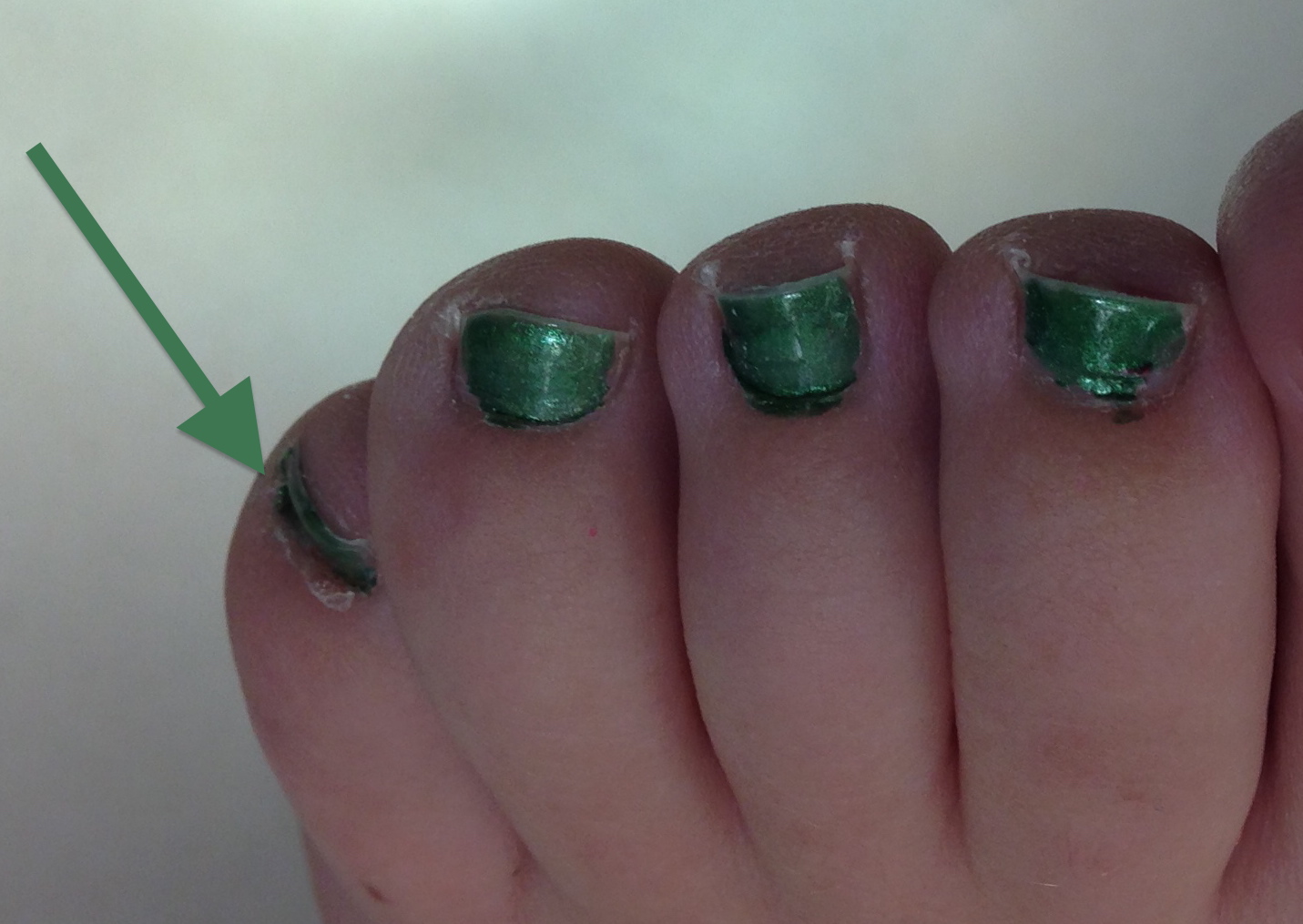
Many people experience discomfort and hardness to the outside of the little toenail, and assume it is because of an ingrown toenail or a hang nail.  They trim the nail back at this side, and maybe even have their doctor remove the side of the nail, but the problem seems to keep coming back.  Why does this keep happening, and what can be done to fix it?

The truth of the matter is that the little toe nail rarely develops what can be traditionally considered an ingrown toenail, and any treatment designed to treat an ingrown nail will fail because the underlying problem, in most cases, is something completely different.  A common thread in these situations is the shape of the little toe itself.  Most people in this situation have little toes that are either contracted (crooked), rotate outward toward the outer side of the foot, or are both.  As the toe skin on the outer side of the toe is thinner than the skin on the bottom, any prominence of the side against one’s shoe or rotation of this side towards the bottom exposes the skin on the side of the toe and nail to pressure it otherwise would not have to withstand.  As a result, the toe skin next to the nail develops a callus to protect itself from such pressure.  Since callus and nail tissue are virtually the same, it can be hard to distinguish this callus from the side of the nail, and it often is erroneously assumed this tissue is part of an ingrown toenail.

When one has an ingrown toenail procedure to remove the outer side of the little toenail, the only result is that there is now a broader space for the callus to spread, fooling people into thinking the ‘ingrown’ toenail has returned.  What needs to be done to treat this condition permanently is something a little more elaborate.  Simple solutions to reduce the outer pressure can be helpful for some, and can include wider and deeper shoes, padding to the outside of the toe (gel and elastic sleeve padding works nicely), or gentle regular filing of the callus that forms.  For long term relief, the abnormal position of the toe must be corrected to reduce the pressure.  This comes in the form of minor surgery, in which the toe contracture needs to be corrected, and  any rotation needs to be reversed to bring the little toe back into a straighter position.  These procedures heal relatively quickly, within a few weeks, and result in reversal of the abnormal callus and the pain that follows it.  Some people have a condition along with this called a Tailor’s bunion, in which the bone below the base of the little toe is prominent towards the outside of the foot.  This prominence has an effect on the position of the little toe, and in some cases needs to be corrected at the same time.  While this leads to a little longer of a recovery period, the results are typically far better than if just addressing the toe itself when a Tailor’s bunion is present.

Because this condition is often misdiagnosed as an ingrown toenail, it is important one see a foot specialist, who will be better trained to recognize the structural factors that lead to its development and can treat it properly while avoiding nail procedures that won’t actually fix the problem.
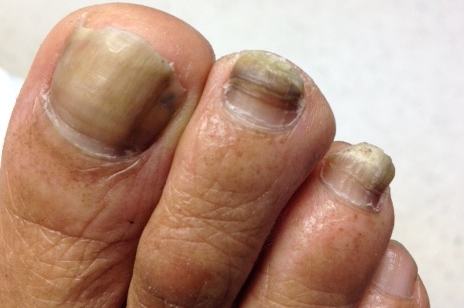
What Can Be Done About A Thick and Painful Toenail?

Many people are surprised to find out that toenails are relatively fragile appendages of the body. Toenails can take a mild amount of abuse from tight shoe pressure, years of toe stubbing or objects dropping on them, damage from jogging and exercise, or changes due to chronic fungus infections. Over time though, the nail root cells that produce the nail plate itself will become damaged, and they will begin to permanently produce nail that is thick, deformed, often painful, and even severely ingrown on one or both sides. As a result, many people find themselves with one or several toenails that hurt with shoe pressure, or anything pushing on the nail (like bed sheets). Unfortunately, these changes are permanent. In the case of nail fungus, it is assumed medication can ‘cure’ the disease. While it is true anti fungal medication can kill fungus in some cases, once the nail reaches a certain point of damage, there is no restoring the nail back to normal.

Treating these painful and deformed nails can be fairly simple. There are topical medications designed to soften the nail and help make it thinner, but unfortunately these typically are ineffective on thicker toenails, and treatment has to be performed for life. A pedicurist or podiatrist can grind the nails down to make them thinner, but this has to be repeated frequently as such nails typically thicken again within a couple of months. A better, and more permanent, option is to simply remove the toenail for good. Many people seem initially put off by the concept of this procedure. Once one realizes the ease of the procedure and its recovery, the fact that under the nail is normal skin that is not cosmetically disfigured without the nail on top, and the fact that there will be no further pain from the nail, the procedure itself becomes a sensible and preferred option.

Removing a toenail is not difficult matter, and for most people the procedure is relatively painless outside of the brief discomfort of the shot needed to numb the toe. The entire procedure including the numbing period is performed in under 15 minutes in an office setting. Once the toe is numb, the problematic nail is easily removed and a chemical is used to kill the nail root cells so no more nail is ever produced in that toe. Called a ‘phenol matrixectomy’, this procedure has been performed for about a hundred years and has great results. The recovery is brief, usually lasting 2-3 weeks and there is no restrictions on activity or shoe use. Most people have no discomfort during recovery, and go about their normal day unaffected by the procedure. The nail bed skin that remains on top of the toe can even be polished to match intact toenails next to it, with no one being the wiser that the nail is gone.

Such a procedure is perfect for those with one or a few painful deformed nails, and is nearly always covered by insurance. I have performed many thousands of these procedures. In nearly every case my patients have confided with me they wished they knew it would have been that easy to get relief years earlier, as they would not have otherwise suffered with a painful nail for so long.

If you have this same problem, be sure to call your local podiatrist to discuss how removing the painful and deformed toenail permanently can lead to relief.

I Felt A Sharp Pain With A Snap In My Arch When I Stepped Down and Now I Can’t Walk

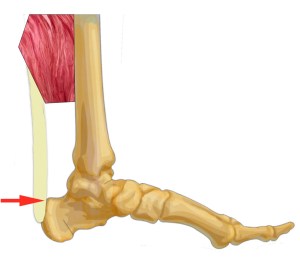
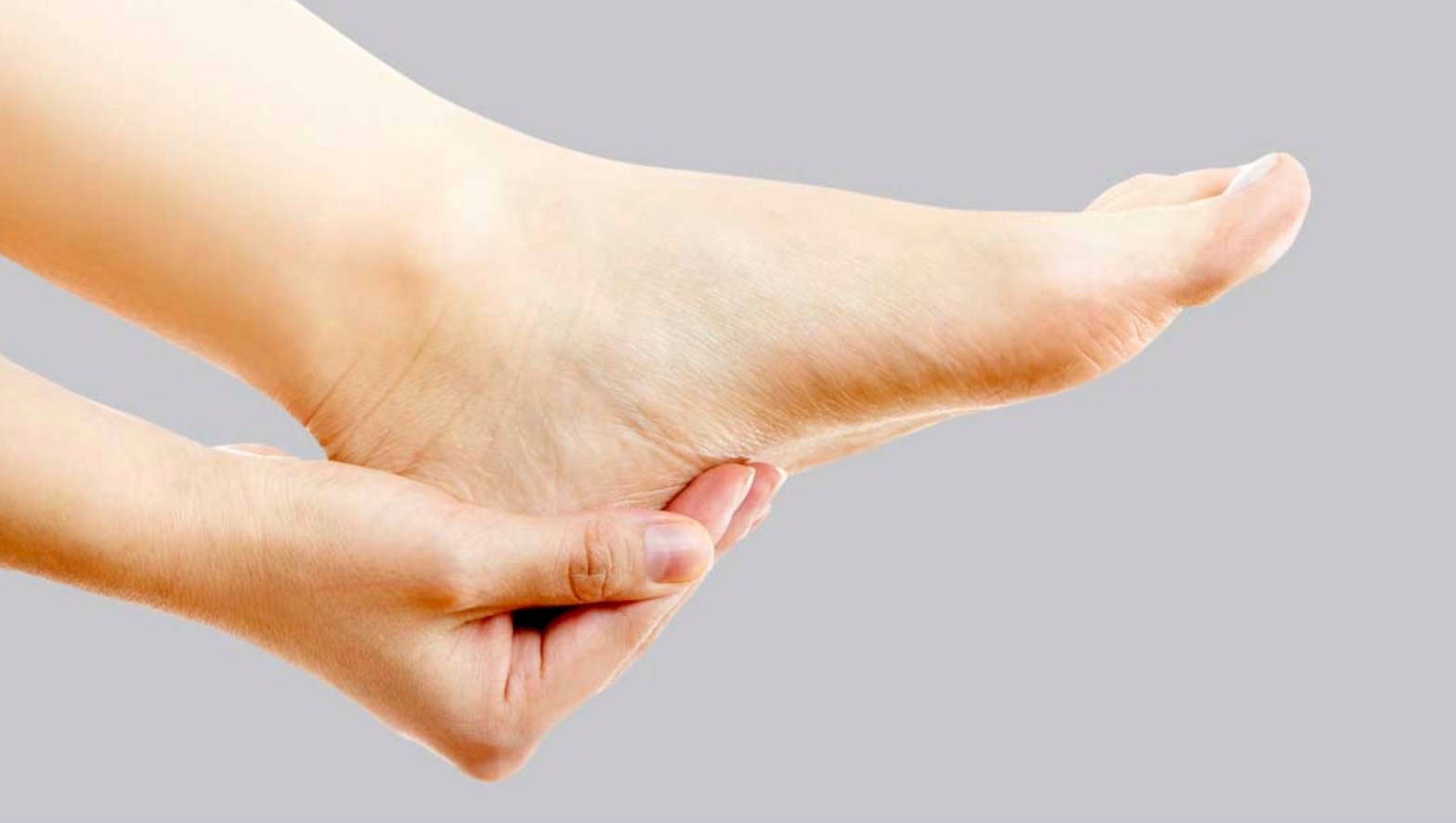
Some of the most frequent foot injuries I see involve the heel and arch.  A number of different injures can cause pain in this part of the foot, including muscle and tendon strains.  However, one structure by far sees the most number of injuries in this region:  the plantar fascia.  The plantar fascia is a stout ligament that runs along the bottom of the foot  Typically it is injured over time, often as a result of strain and inflammation  to the fibers from abnormal foot structure, poorly supportive shoes, or repetitive activities like climbing up and down ladders.  This type of pain has a more gradual onset, and is known as plantar fasciitis.  However, when the pain is sudden, and accompanied by a mis-step as well as a tearing or snapping sensation, the injury is often more severe, and involves a partial tearing of the fascia.  As fasciitis and a tear are treated quite differently, prompt diagnosis and proper treatment can make the difference between a relatively short recovery period and a prolonged done.

The plantar fascia tear, or rupture as it is commonly known, can occur when a foot is planted on the ground firmly at the base of the toes, causing a sudden stretching of the plantar fascia beyond its limit to stretch.  This can also occur when the foot is suddenly flexed upward by force, or when stepping on an object like a root or the broad edge of a rock while barefoot or in poorly supportive shoes or sandals, in which a specific part of the fascia is forced upward suddenly.  The symptoms can include a sudden sharp or burning sensation, accompanied by a sensation of tearing or snapping.  For most, it is extremely difficult to bear weight.  The fascia tissue usually only tears partially, with most of its substance remaining intact.  However, this smaller part that is torn can create a significant amount of pain.  Often felt in a specific location in the arch or heel, the pain can eventually expand to include a broader area.

Treatment of plantar fascia tears requires immediate immobilization of the foot to reduce forces that load onto the plantar fascia when walking, and permit the tissue to heal.  The mainstay of my treatment includes the use of a pneumatic walking boot to displace the forces of walking, as the shape of the bottom of the boot is that of a rigid rocker bottom design, which helps the foot roll over the ground without bending.  Severe cases of plantar fascia tears do require further immobilization in a below knee cast and non- weight bearing, although most people do just fine in the walking boot.  It is typical for the fascia to take four weeks to heal, although some people can have prolonged discomfort for another month or two.  If this injury is not treated and left to heal on its own, the time for healing could extend into months and years, as the development of inflammatory plantar fasciitis becomes inevitable at that point.

If you suddenly feel pain in the heel or arch after stepping oddly (especially with a tearing or snapping sensation), and the pain does not go away within a day or two, it is a good idea to see your local foot specialist for immediate care (or see me if you are in the central Indiana region).  This could make the difference between a quick recovery and a protracted one.

Do I Need To See A Doctor For My Anke Sprain?

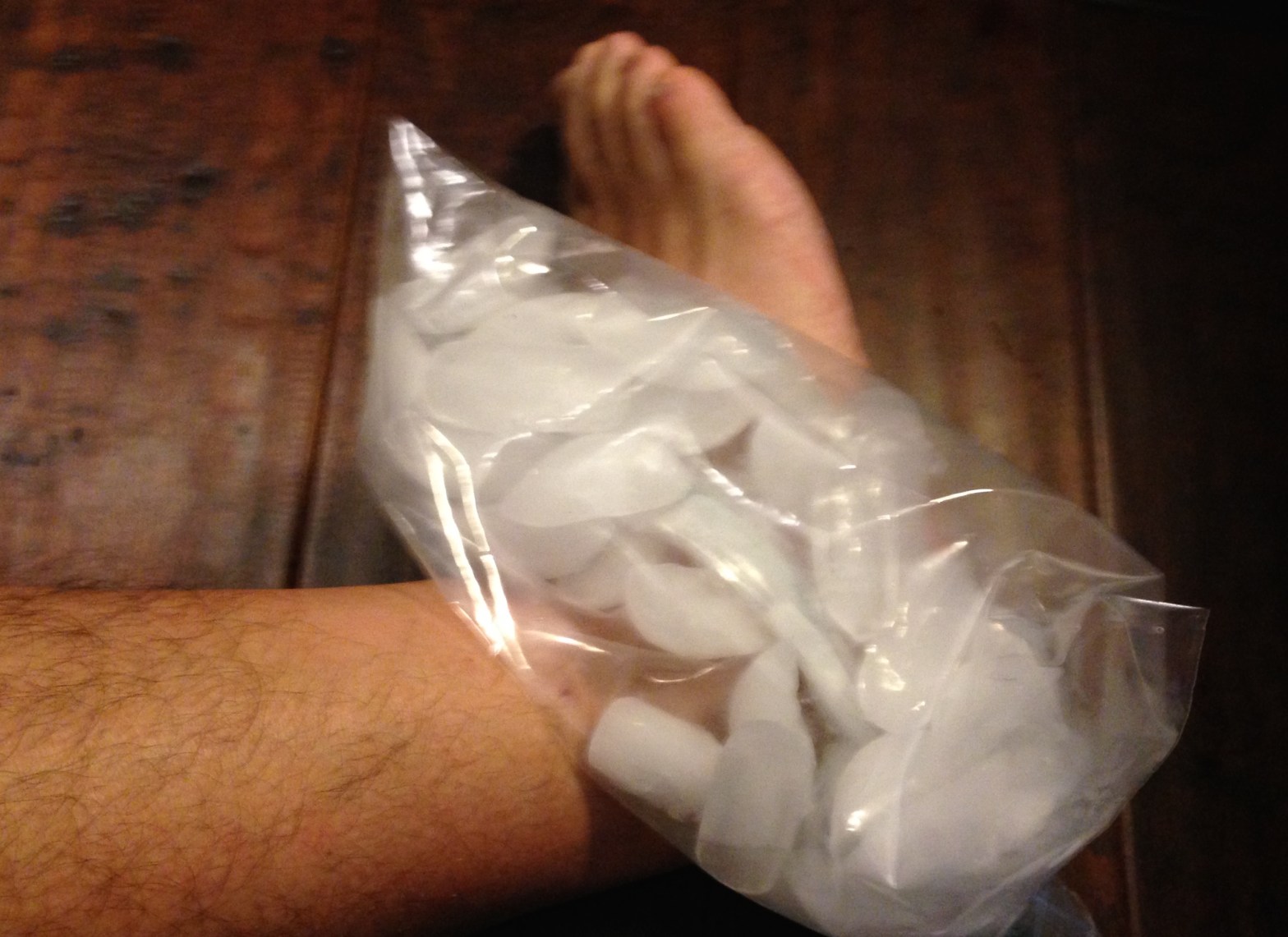
Ankle sprains are one of the most common injuries that occur in the body.  Athletes playing sports make up part of the millions of people each year who sprain their ankle, as well as people simply walking on uneven ground, stepping into a hole, slipping on ice, or awkwardly stepping off of a curb.  Ankle sprains can run the range from simple to severe, with some sprains feeling fine after a few days to others with pain lasting well over a month.  Ankle sprains are one of the most under treated types of foot and ankle injuries, and these seemingly simple injuries can often have long term effects on the health, function, and stability of the ankle as a whole.

An ankle can be injured when it rolls either inward or outward.  The ankle is bound together on either side by strong straps of tissue called ligaments.  The ligaments on the inner side of the ankle are particularly strong, and rarely get injured.  The ligaments on the outer side of the ankle are considerably weaker, and therefore it is easier for the foot to roll inward under the ankle during an injury, which then cause the outer ligaments to either stretch or tear.  There are three total ligaments on the outer side of the ankle, and the severity of the sprained is defined by how many ligaments were injured, and whether there was simply a stretching of the tissue or an outright tear.  Whether stretched or torn, an ankle sprain can pave the way for future sprains to more easily occur because of the looseness of the tissue that follows such injuries.  While tears are certainly more unstably, stretch injuries can also lead to ‘loose ankles’ that have a higher chance of re-injury, and even an elevated chance of that injury causing a fracture in the ankle.  Unfortunately, even simple sprains can also have additional injures dealt to the foot by the force of the sprain injury, which may go unrecognized or mixed in with the pain of the sprain itself.  These can include muscle strains in the leg or foot, sprains of smaller joints in the foot, microscopic fractures in bone, nerve stretching injuries, and tendon strains.  It is not uncommon for these additional injuries to be missed even in an emergency room, where sprain care is basic and concentrated on making sure a fracture is not present.  These additional injuries may be subtle at first or simply painful with the sprain, but over time can gradually lead to secondary areas of pain, further foot or ankle instability, arthritis, weakness, or loss of some sensation (if a nerve was damaged).

Because of the long term implications of ankle sprains and their associated secondary injuries, it is recommended sprains be evaluated by a physician, with a strong preference towards a foot and ankle specialist well trained to recognize all the subtle elements that make up these injuries.  Early appropriate treatment can be vital to ensuring the ankle passes through the injury period intact and healthy.  Examples of early intervention includes stable ankle bracing, early therapy and mobility exercises, as well as a guided return back to activity.  this level of treatment can make a world of difference between an ankle that stays healthy and strong, and one that becomes chronically weak.  As the after-effects of a sprain may take years to fully appear, the notion of being ‘tough’ and ignoring the sprain in the hope it will simply heal on its own is unwise, especially when professional care for these injuries is so easily available.

Do Broken Toes Really Need Medical Attention?

One of the most common foot injuries is the toe fracture.  This seemingly minor injury can be the source of much pain and annoyance, and often hails from a midnight misadventure to the bathroom as a dresser suddenly lurches in the way of the unsuspecting sleepy victim.  The common assumption is that there is nothing that can be done for a toe fracture, so why bother to have it addressed?

My response to this is that if it were a finger, would one not seek medical attention?  Yes, I realize toes and fingers serve two very different purposes.  However, the anatomy of the injuries is generally the same, and the severity of not addressing these injuries in a timely manner could be equally problematic.

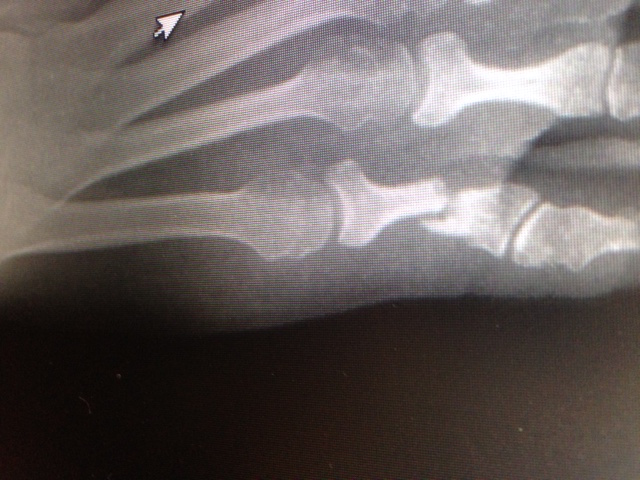
Toe fractures can run the gamut of simple clean breaks, all the way to displaced fractures that stick out away from the intact bone.  Clean breaks are simply treated with buddy splinting of the injured toe to the next toe, and the use of a stiff soled shoe.  However, there is no external indication as to whether a toe fracture is a clean break or if it is shifted out of position, and the level of pain or swelling associated with the injury does not offer a true clue either.  X-rays and medical attention are needed to determine this, as a decision has to be made as to what needs to be done to put the toe bone back into place and keep it there while it heals.  This may be as simple as manually distracting the toe to put the fracture in place with the use of splints to keep it there, or, in serious cases, treatment may require surgery to repair and secure the broken bone.  The danger of the bone not setting right comes in the form of future issues with the toe, which includes new areas of prominence from the displaced and malformed bone that may rub in shoes and cause sores (a particular danger for diabetics), long term pain from a non-healing fracture, or long term arthritis if one of the joint surfaces in the toe was disrupted by the separated fracture.

Ignoring a toe fracture could prove costly, as some non-healed fractures require additional surgery to remove the fractured bone end in an effort to end pain.  A simple visit to a physician, preferably a foot specialist (who by nature deals with toe fractures on a regular basis), can ensure that this nagging injury heals properly, quickly, and without long term consequence.

How Much Should A Good Pair of Shoes Cost?

I am often asked by my patients: “how much should I spend on a good pair of shoes to keep my feet from pain?”   The answer to this question is not as simple as one would expect.

The short answer to this question is that cost may not necessarily matter.   Shoe prices, while often reflective of the overall quality and construction of the shoe, are just as loosely dependent on the whims of the fashion world as any other article of clothing.  Certain trendy items and products from high end fashionable manufacturers will always have higher prices that do not necessarily reflect either the quality or the medical grade ‘worth’ of the actual shoe.  In fact, some highly expensive shoes are downright awful for the human foot.

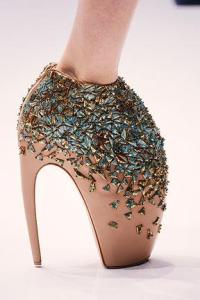
Recent poor trends include rocker bottom shoes a few years ago, and more recently lightweight minimalist type of cushioned shoe.  Of course, the fashion industry historically always contributes its own horrific shoe designs that have little correlation with the actual shape of the foot.

rocker bottom fitness shoesalexander-mcqueen-armadillo-2

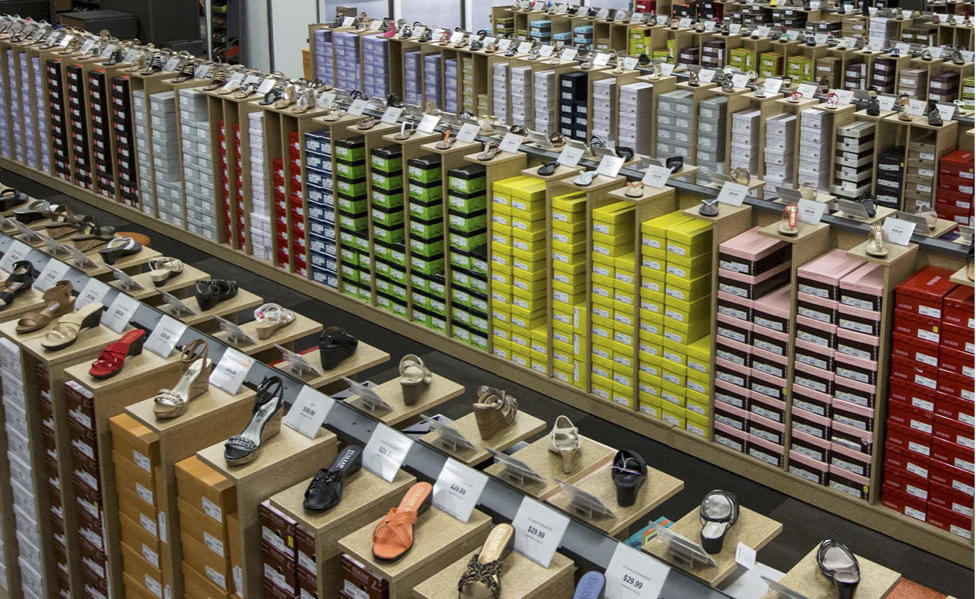
Given these considerations, the most expensive shoe is not necessarily the best.  So how can one gauge how much should be spent on a shoe?   Well, the way to ultimately reach this decision is to forget about price.  First and foremost, a shoe should be proper for one’s foot structure.  In particular, flatter feet need stiffer shoes, high arch feet need cushioned shoes, and regular feet need something in between.  Your podiatrist can help determine what type of shoe your foot structure requires.  From this basic criteria, one must then figure out what type of activity the shoes are going to be worn in, as this influences the general need for construction quality and durability. Finally, one should be properly fitted into the shoes by a trained clerk who knows their products well.  Often, this does require going to a store that costs a little more in exchange for better service.

From the above criteria, the price of the shoe should become self apparent based what shoe supports one’s foot the best, is appropriate for its intended activity (daily use versus labor versus specific athletic activities etc.), and fits appropriately.  The price of the shoe that fits these criteria is the price you should pay.

Oh, if you are paying over $180 on a pair of retail shoes, you really are paying too much, no matter what you are buying.

Did You Know You Can Get Something Like Carpal Tunnel Syndrome in the Foot?

Fist off- yes, I am still here!  Unfortunately due to some pressing work projects, I had to take a break from posting to my website and social media.  I’m back now, and I promise to post more frequently.

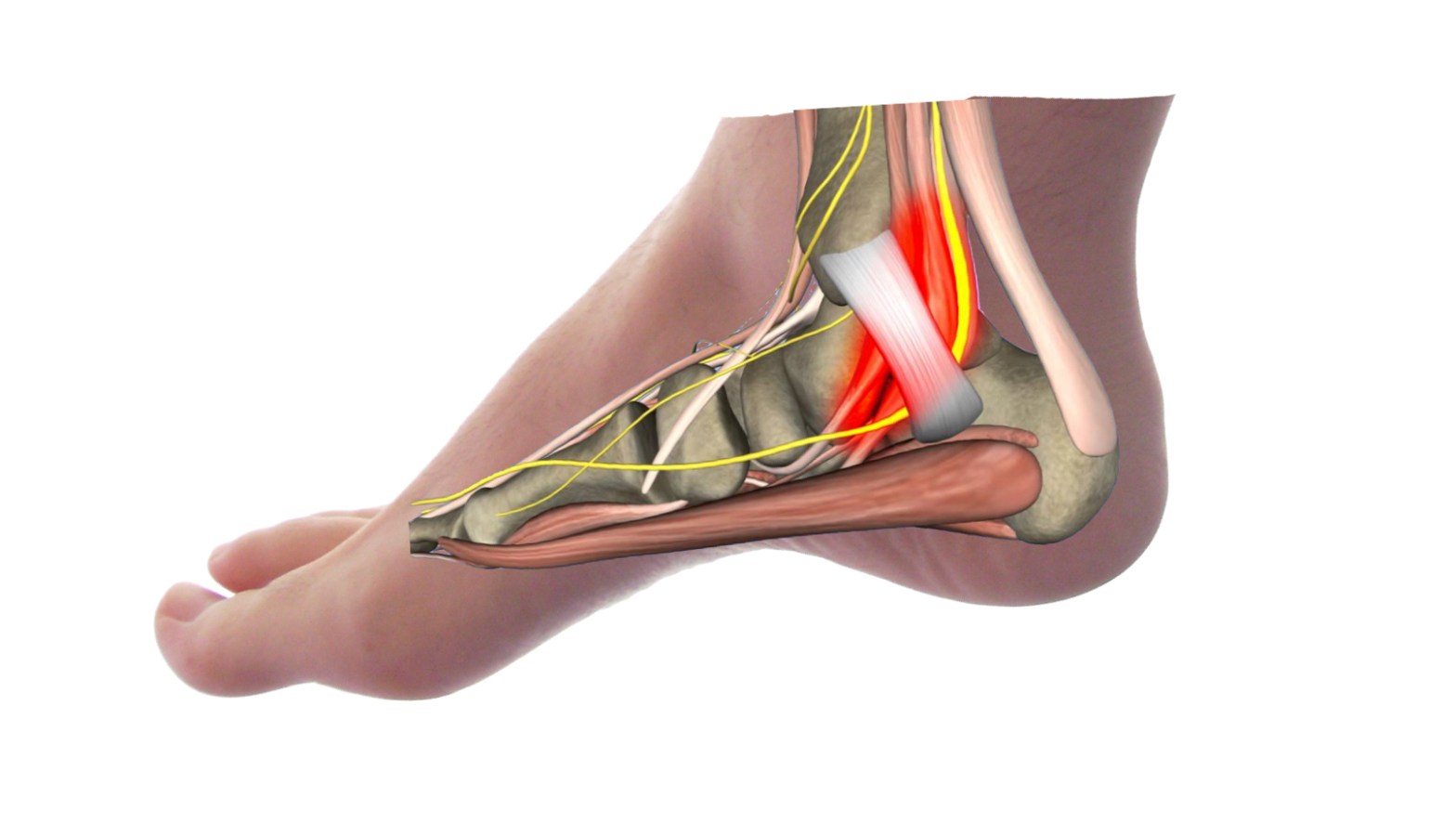
As the title says, the foot can experience the exact same type of condition the hand experiences during carpal tunnel syndrome.  In the wrist, a ligament (firm connective tissue) binds together nerve, blood vessel, and tendon tissue that crosses underneath this tunnel-like region on the way to the hand.  Caused by a number of issues, including chronic wrist strain and repetitive motions such as chipping away on a keyboard, the resulting symptoms can include pain, numbness, burning, or tingling in the wrist and hand, amongst other possible symptoms.  Carpal tunnel syndrome is well known as it is very common, and very annoying.  The EXACT SAME condition can occur in the foot.

In the foot, the condition is called tarsal tunnel syndrome (carpal refers to hand, tarsal to foot).  The same symptoms can be felt in the bottom of the foot and heel, and the cause is generally the same.  A ligament is present on the inner side of the ankle, and binds down a group of blood vessels and tendons under the inner side of the ankle bone.  The tibial nerve is present in this area also running through a space that can be considered like a tunnel, and can be irritated.  The nerve irritation can come from tightness in the overlying ligament, fibrous adhesions within the tarsal tunnel, varicose vein braces in the vein that runs next to the nerve, or masses/cysts in the space near the nerve.  This irritation will eventually damage the nerve, and abnormal sensations will develop in the part of the foot the nerve gives sensation to, namely the majority of the bottom of the foot and heel.

Most of the time, the cause is repetitive strain to the inner ankle, either from a foot structure that rolls outward (flat or flattening feet) and tightens the ligament, tight shoes with abnormal pressure to the inner ankle, or trauma to this region that raises the pressure in the tarsal tunnel.  Varicose vein braces, masses and cysts, as well as multiple less common causes can lead to tarsal tunnel syndrome as well.

If not treated in a timely manner, the symptoms can worsen, and be more difficult to treat and reverse.  Initial treatment usually revolves around stabilizing the inner ankle to reduce mechanical strain the tissue, as well as measures to actively reduce inflammation within the tarsal tunnel.  Diagnostic studies during treatment may include x-rays to look for bone abnormality, a nerve conduction velocity test that looks for delayed nerve transmission time across the tarsal tunnel, or an MRI to look for masses.
Surgical release of the tarsal tunnel, just like surgery for carpal tunnel syndrome, is very successful and nearly always leads to instant symptom resolution when conservative measure have failed.

Tarsal tunnel syndrome can be misdiagnosed by those not well trained in foot and ankle conditions, as sometimes the symptoms mimic other common conditions like plantar fasciitis or a neuroma in the ball of the foot.  It is important that this be treated by a foot specialist experienced in treating the tarsal tunnel.


New School Year, New Shoes!

With fall approaching and the start of school already here for many Hoosiers, many parents have already been hunting for the perfect bargain for school supplies and clothes. While we start early, many parts of the country are not starting until after the upcoming Labor Day holiday weekend.  Among the bustle of supply searches and new outfits to impress comes shoe shopping. Shoe shopping can be challenging, as parents have to weigh between fashion and function.  The most common question I get is what are the best shoes for children and how often do shoes need to be changed?

To answer that question, one must consider the anatomy of a child’s foot in combination with recess and after school activity.  The bones of children are different from those of adults.  Growth plates in children’s bones do not close until age 15-17 in boys and age13-15 in girls.  Repetitive overuse can cause inflammation of the growth plates causing heel pain. This is most commonly seen in children who participate in multiple sports or have long or frequent practice schedules after school, but can also be seen in children whose only activity is recess or after school play.  Additionally, growing feet are at risk for skin irritation from poorly fitting shoes.  This includes skin pressure damage and pain in the case of tight shoes, and skin blistering from shoes that have been ‘over-sized’ to permit growth throughout the school year.  A larger, floppier shoe can also lead to sprains and other injuries from the unstable shoe.

When looking for shoes, the shoe itself should have several characteristics that provide support to the growing foot.  Unfortunately, many children’s shoes available in retain stores are cheaply made and offer little support.   A quality shoe should have a firm heel counter (material in the back of the shoe) that does not easily compress or break with pressure, and the shoe should not slip at the heel.  A shoe that can twist like a wringing towel is also not very supportive, and should be avoided.  The shoe should have adequate cushioning of the insole to help absorb the shock of activity, and some children with flat feet may need additional arch support in the form of a quality insert or custom orthotic.  The initial shoe purchase should be based on the child’s current shoe size, and ideally only a half size increase should be considered to give ‘room to grow’ if these can be found.  Children’s feet should be measured monthly as they can grow quickly.  From a simple space perspective, there should be about one-half inch (1 cm) of space between the tip of the toes and the end of the shoe.   As this decreases while there is foot growth, the shoes will begin to become uncomfortable.

Buster Brown ad copy

Parents should avoid the use of ‘hand-me-down’ shoes from older siblings, as the internal structural wear and tear will likely be substantial, even if externally the shoe looks fine.  Conversely, a new shoe should be comfortable from the start.  The concept of breaking-in a shoe is outdated and not healthy for the feet.

Overall, a parent should certainly look for a shoe that their child likes and will want to wear, but the shoe needs to provide support and stable structure. Not only is this necessary for comfort, but it may help prevent or sow the progression of adult acquired foot deformities in the future.

I hope your kids have a great school year, and that you find a shoe your child likes and feels comfortable in!

Preventing Common Foot Problems Seen In the Summer: Foot Pain

Finishing on my prior posts, I am discussing  prevention of foot problems that we commonly see an increase of during the summer months.

The final topic I want to discuss is foot pain, specifically heel and arch pain as well as tendon damage.

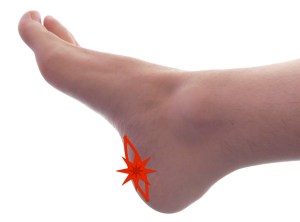
Heel and arch pain, often caused by inflammation to a ligament called the plantar fascia, can develop throughout the summer.  The use of less supportive shoes, like sandals, slides, and flip flops, as well as barefoot walking around the pool can directly lead to gradual strain on the plantar fascia.  As this strain builds over the summer, the plantar fascia can become inflamed and thickened.  Eventually, pain in the heel and arch will develop.  This pain can come and go, but will eventually remain constant each day.

plantar fasciitis

Prevention of this painful condition is not difficult if one keeps in mind the structure of their feet and their choice of shoes for the summer.  Simply put, flip flops and flat sandals are bad for the feet, and should be used only for short periods of time.  A better choice is a more supportive sandal, such as Orthaheel, Birkenstocks, Naot, or Fit Flop.  For longer periods of activity, such as during a walking tour or shopping trip, more appropriate shoes, such as walking or athletic shoes, should be worn.  With these shoes, the arch has a better chance of staying supported, and there is less likelihood the plantar fascia will become strained.

The foot also has a number of important tendons that function in a specific way and in balance with each other to keep the foot stable during standing and walking.  There are times in which these tendons can become damaged due to poor support or an unstable walking surface.

The human foot has the capability to adapt to instability over time, but in our concrete surface world full of dangerous things to step on, we rely on shoes for most of our lives.  The adaptability of these tendons is reduced, and anytime we convert to less supportive shoes we run the risk of harming the tendons.  This is especially true in the summer, when we increase our activity and at the same time wear less supportive sandals or walk barefoot.  When this is combined with one’s naturally occurring flat feet, high arches, or activity on unstable and uneven surfaces, the potential for tendon strain is much higher.

The primary tendons that can be injured include the Achilles tendon on the back of the heel, the posterior tibial tendon on the inner side of the foot, and the peroneal tendons on the outer side of the foot.  Simple tendon stretching and straining can turn into inflammation, tendonitis, and tendon weakening.  These problems can become chronic, and last well beyond the summer.

Achilles tendonitis

Prevention of tendon damage is fairly easy, similar to reducing heel pain potential.  The use of proper footwear during increased activity or activity on unstable or uneven surfaces is very important.  Wearing a flip-flop sandal during a long walk or trip to an amusement park, for example, is not a good idea.  The same can be said about wearing an improper shoe during a short hike on a hilly or rocky surface.  The right shoe for the activity can make a difference, and can protect important tendons that attach in the foot from harm.  If pain in the foot does develop, a timely assessment by one’s podiatrist can start the treatment and recovery process early, and stop the involved tendon from becoming chronically damaged.

This concludes my discussion of common foot problems seen in the summer, almost as the summer here in central Indiana concludes for most schoolchildren.  I plan on discussing back-to-school foot and shoe considerations in a future post, so stay tuned!

Preventing Common Foot Problems Seen In the Summer Part 3 (Athlete’s Foot Infection)

Once again adding to my prior posts regarding this topic, I am discussing  prevention of foot problems that we commonly see an increase of during the summer months.  Once again, there are several common foot conditions that we see year round that become somewhat more prevalent during the summer months, for various reasons.

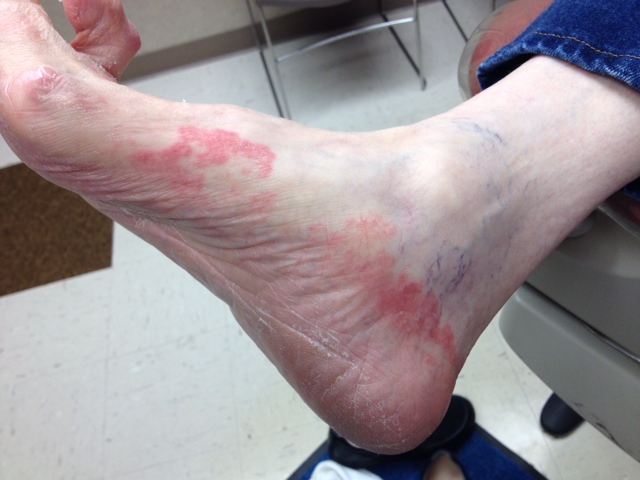
Today, I will discuss athlete’s foot infection.  This infection is due to invasion of the foot skin by fungus, a microorganism similar to bacteria that is found everywhere.  Fungus and related yeasts and molds are well known by their larger family members, including mushrooms.  The kinds of fungus that infect humans are microscopic.  There are a few species that take a liking to warm, dark, moist parts of the body.  These include skin folds, the groin area, as well as the bottom of the feet and in between the toes.  The resulting infection by these fungal species causes red, scaling, irritated skin that can itch and can also be blistery.  It can easily pass from person to person, especially through contact with moisture and moist skin, such as seen in showers and locker rooms.

Athlete's foot

While athlete’s foot fungus is fairly easy to treat, it is a nuisance infection, and if present long term can spread to the toenails where it causes a much harder to treat infection.  Preventing the infection is possible if one avoids direct contact with moist surfaces in shared bathing and changing areas.  Shower shoes can help prevent spreading this condition, both for those wanting to prevent it and those with the condition.  If one does develop the common symptoms associated with athlete’s foot, prompt treatment can help keep this condition from becoming chronic, and place family members at less risk for developing the infection.  Fungus cannot be outright avoided, as it is found in multiple sources and some people may simply be more genetically likely to get the infection, but simple avoidance measures and early treatment of developing infections can help.


I will continue this discussion next post.